

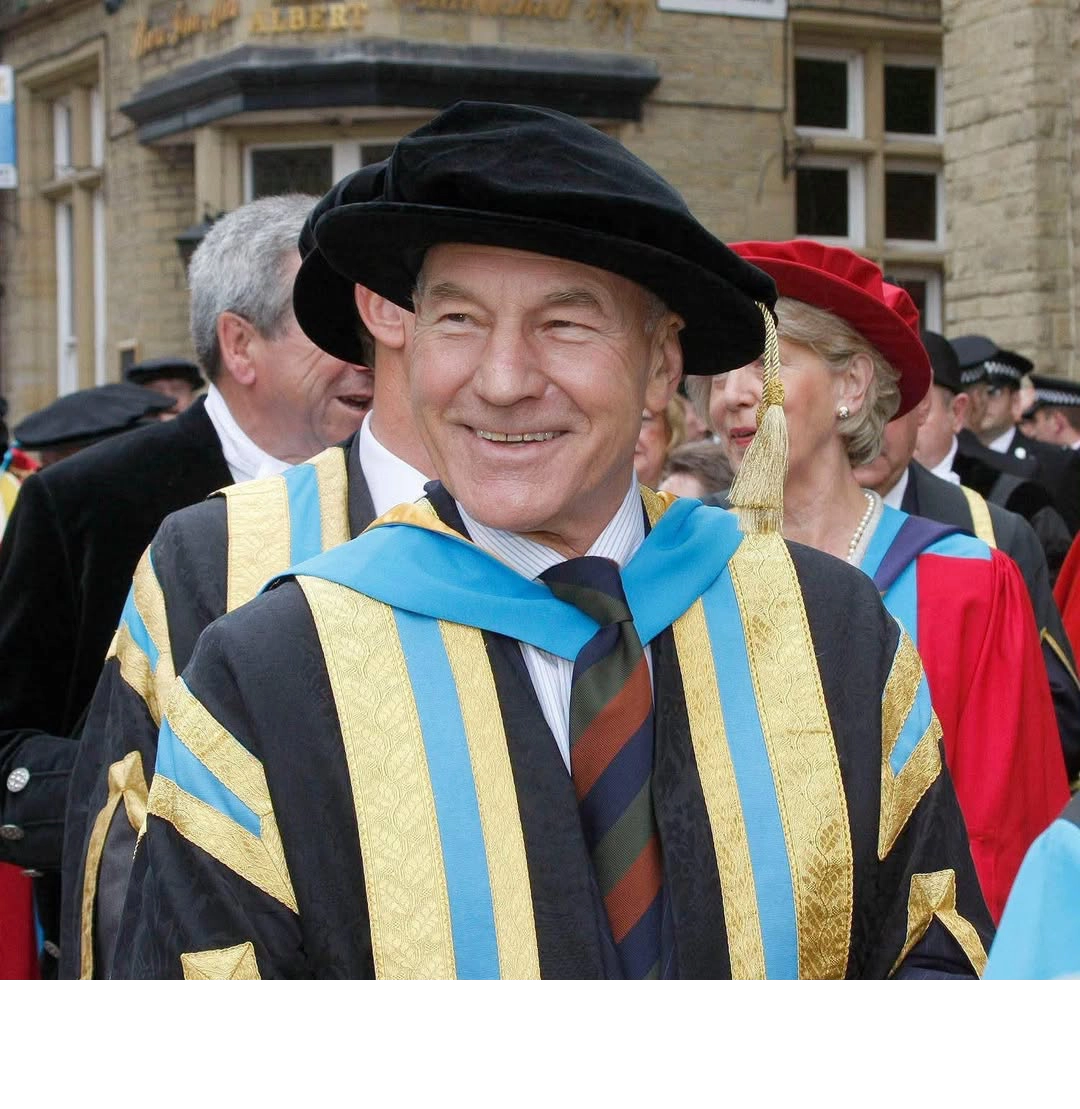
In spite of the atrocities we’ve committed (something Gene Roddenberry understood), we’re creatures with immense aspirations, some so distant it would take something equipped with a warp drive to reach them. As seen through the lens of Captain Jean-Luc Picard played by the inimitable Patrick Stewart, we’ve caught a glimpse of our collective potential, of the ideal we imagine to be our future.
I remember watching the pilot episode of Star Trek the Next Generation, and at the time I had no idea who Patrick Stewart was, but that would soon change.
Stewart’s performance in The Measure of a Man, an early episode focused on the legal status of Lieutenant Commander Data, an android who serves as one of the Enterprise’s senior officers. In it, Data is ordered to report to an expert on artificial life forms who wishes to dismantle and study him in order to learn how to construct more, similar androids, and Picard is tasked with defending Data’s right to refuse this order before a judge.
I single this one episode out because it embodies two important things: the reoccurring moral and ethical explorations that separated Star Trek from Star Wars; and how Patrick Stewart’s theatrical experience transformed what could have been discarded as a legal procedural to something that had historical human-shaped dimensions and importance, a point raised by Whoopi Goldberg, who played the enigmatic Guinan:
“I remember at one script conference, Whoopi Goldberg, during the period when she was with us on the show, saying what we ought to make clear in this—that we’re actually talking about slavery,” Stewart recalled. “And it was a great point to make. If we create independent life but keep it under our control, what is that? It can be said to be a form of slavery.”
I found these philosophical explorations to be so fascinating, and an argument to slow down, to drop out of warp, take a breath and think about what we’re doing, the implications of what seem logical and reasonable, sometimes grounded in good intentions, and consider perspectives not our own.
I don’t experience loss like most people (I’m swift to move on, too swift for some), but the loss of Patrick Stewart — not a surprise, given his age — has gotten to me a bit. But (and I recognise some could construe this as strange), the timing of Stewart’s death has been a perfect response to these dark and tumultuous times, reminding us of the richness and profound goodness of his life, as an overt socialist, his decades-long friendship and allyship with and to Ian McKellan (long before some of us were born, when the stakes for such associations often had serious consequences for some people in their choice of vocation, not to mention their social standing), and — a cause personal to him, having witnessed the violence of his father against his mother — his advocacy and support of those enduring and surviving domestic abuse.
“People won’t listen to you or take you seriously unless you’re an old white man,” he said, “and since I’m an old white man I’m going to use that to help the people who need it.”
Patrick Stewart was drawn to the roles of Professor Charles Xavier and Captain Jean-Luc Picard because both characters were noble in their pursuit of something as fragile as hope, not as a mere figurative and aspirational thing, but as something real and tangible.
As a fellow Yorkshireman (I live 40 minutes from Huddersfield), Stewart embodies (present, not past tense) our best qualities and that makes him a source of immense pride.
“Just because someone stumbles and loses their path, doesn’t mean they’re lost forever.”
Yes, he’s gone, but look at the work Sir Patrick Stewart leaves behind, and how it’s going to take the evolution of our species across hundreds of lights years before that legacy becomes anything less than the beacon we’re hurtling towards instead of forgetting.